
Pedagogical Practice 👩🏾🎓
As a context for the transmission of skills and knowledge, and as a bridge between the workplace and formal learning, teaching and learning presents itself as a very important source for both texts and documentation of mathematical practices. Designated learning spaces such as tinnai schools, the main form of education across precolonial Tamil Nadu and Keralam, as well as situated learning through apprenticeship, involved various forms of scaffolding to ease young learners into practice. Pedagogical interventions by senior practitioners or teachers can be seen in the form of interpolations, commentaries, and additions to various texts, as well as in the use of mnemonics and tools such as coconut leaves (ōlai) to model the proportions of a sculpture.
This collection focuses on texts and other artefacts explicitly related to teaching and learning, particularly in tinnai schools, such as kaṇakkatikāram and eṇcuvati. We also include compendiums of riddles and puzzles that circulated among people. These “clever” problems would have served as tests of virtuosity for mathematical learners and practitioners in a milieu characterised by its orality.
The collection also includes texts dealing with advanced mathematical techniques and practices that may not have been part of learning in village schools, but which circulated among specialists, such as those involved in astronomical computation, accounting, and related fields.
Our collection comprises texts in most of the numerically dominant languages of India. The emphasis on oral practices and memorisation as a mode of learning is evident across different language traditions. The similarities and differences in pedagogical practices, texts, and artefacts across these traditions remain to be studied, as do the processes of transmission and exchange across different geographical locations.
Currenlty, limited by our exposure as well as available resources, some of the languages are under represented in our collection. This is something we are actively trying to address. So, we are happy to welcome any forms of contibution which can broaden the scope of our collection.
Overview of the Teaching and Learning Collection
-
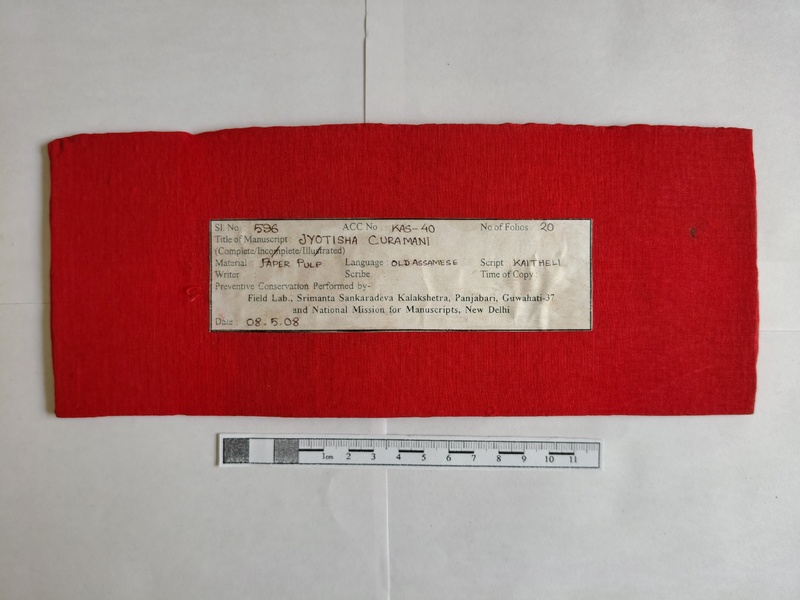 Jyotish ChuramoniIt is a work on Arithmetic and land survey. It deals with the Four Rules of Arithmetic, simple and mixed, and also lays down rules relating to survey and measurement of land, etc.
 -
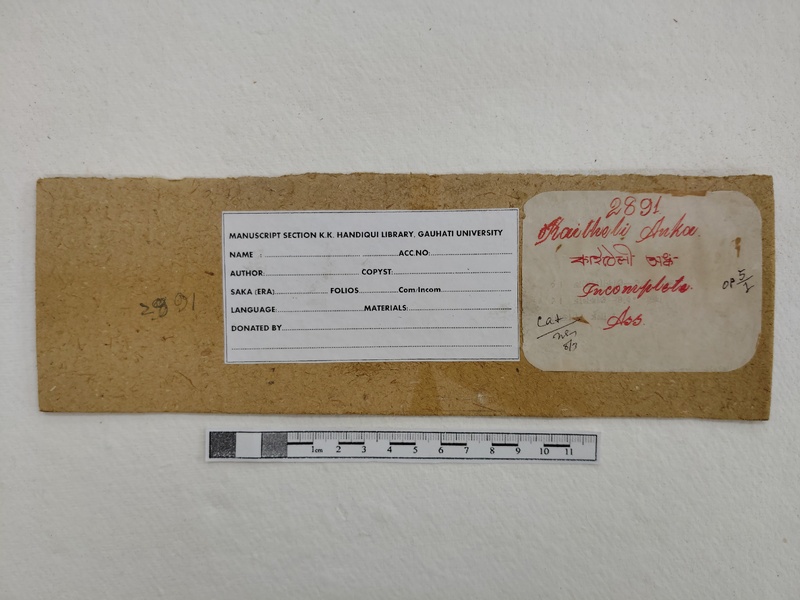 Kaitheli AnkaThe manuscript includes mixed problems of Kaitheli Mathematics
 -
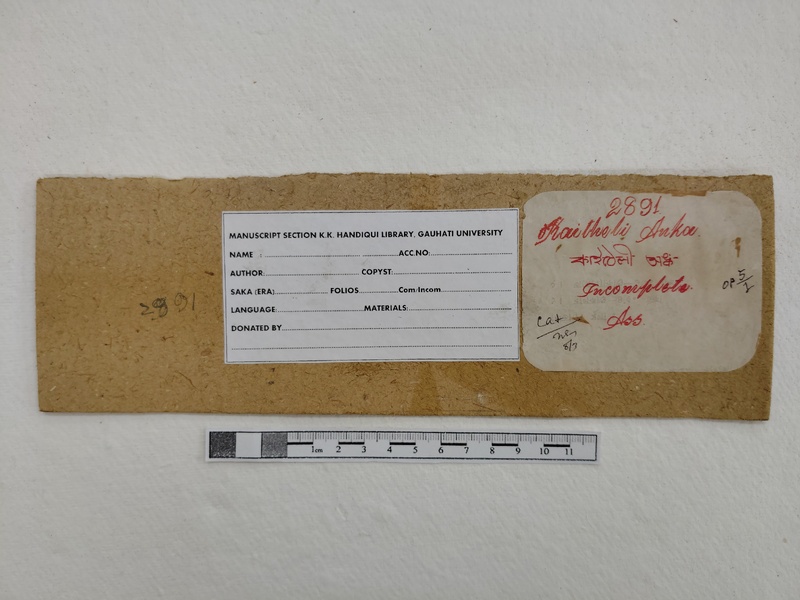 Kaitheli AnkaThe manuscript discusses land surveying, measurement of solid items using measuring units kāun, gaṇḍā, etc.
 -
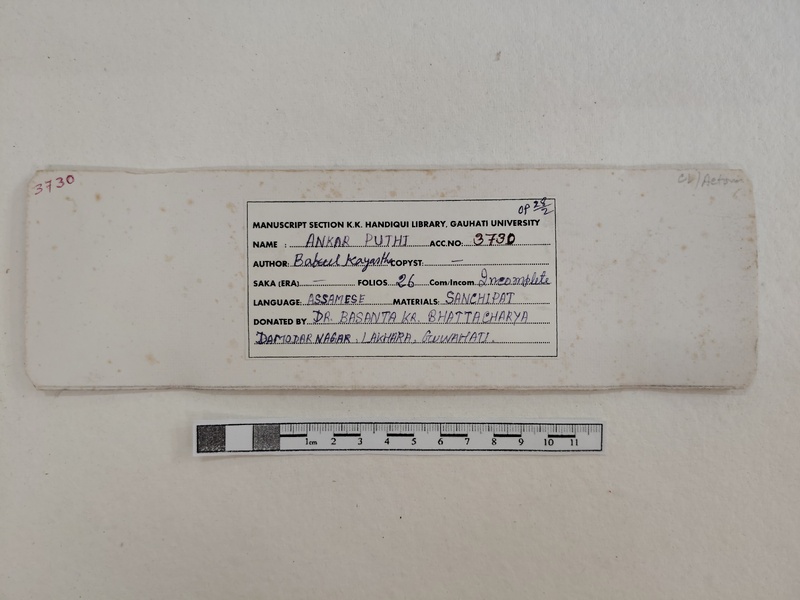 Ankar Puthi
 -
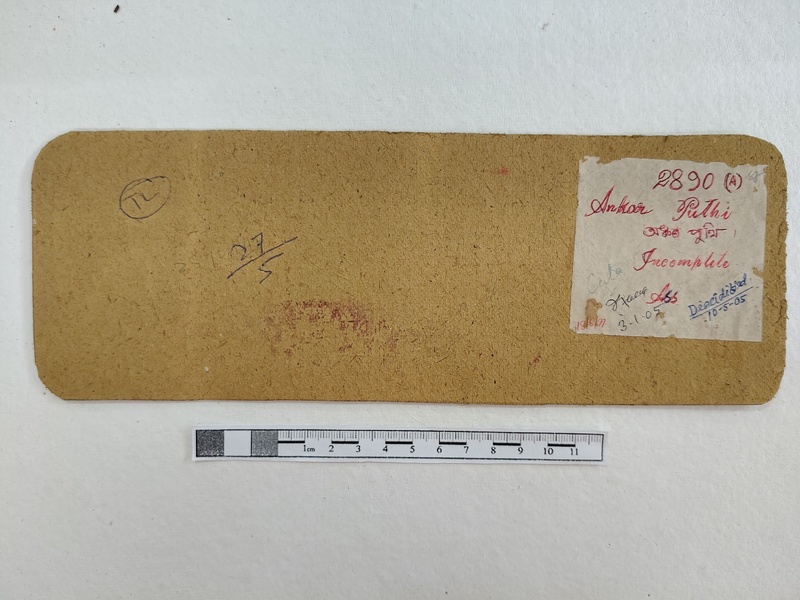 Ankar Puthi
 -
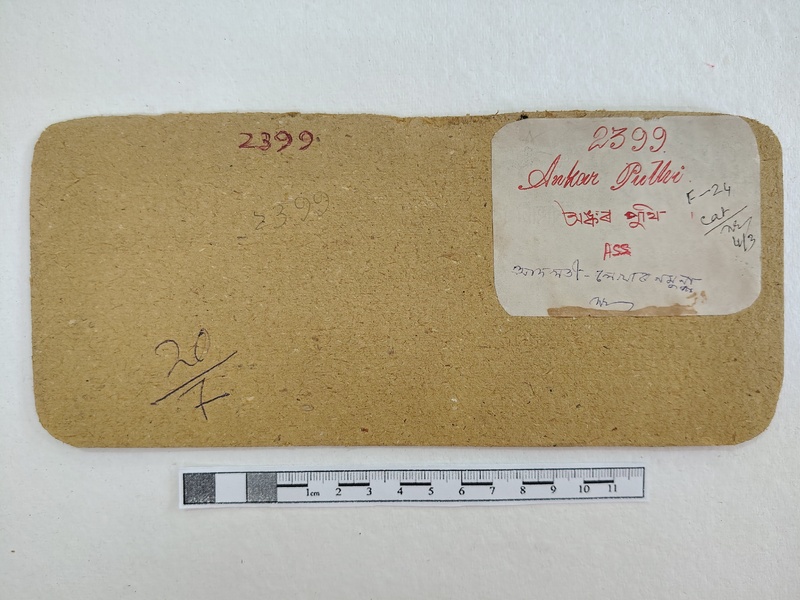 Ankar Puthi
 -
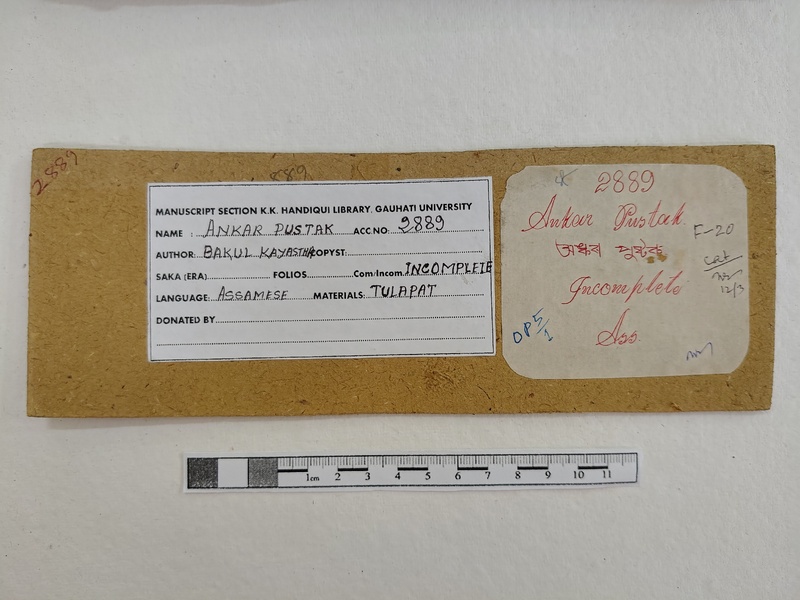 Ankar Pustak
 -
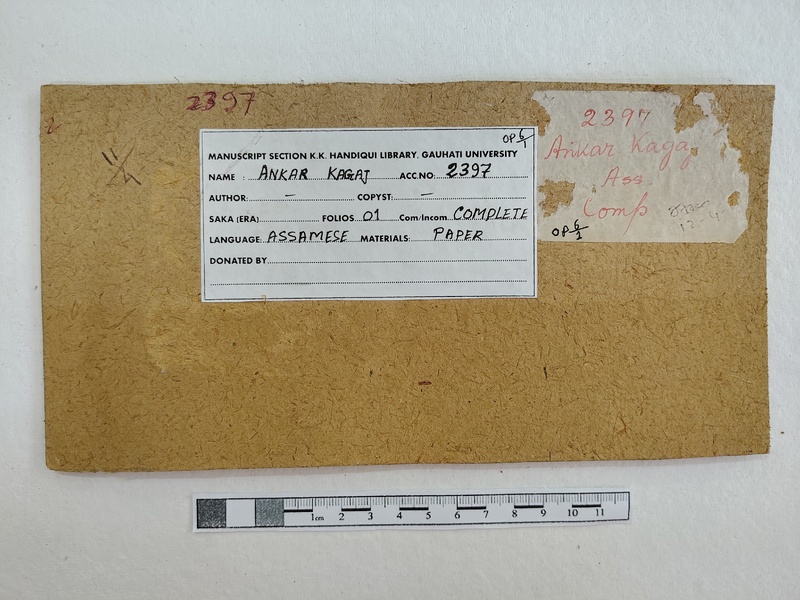 Ankar KagajBeginning with a discussion of land surveying, the manuscript proceeds to address the measurement of various solid objects.
 -
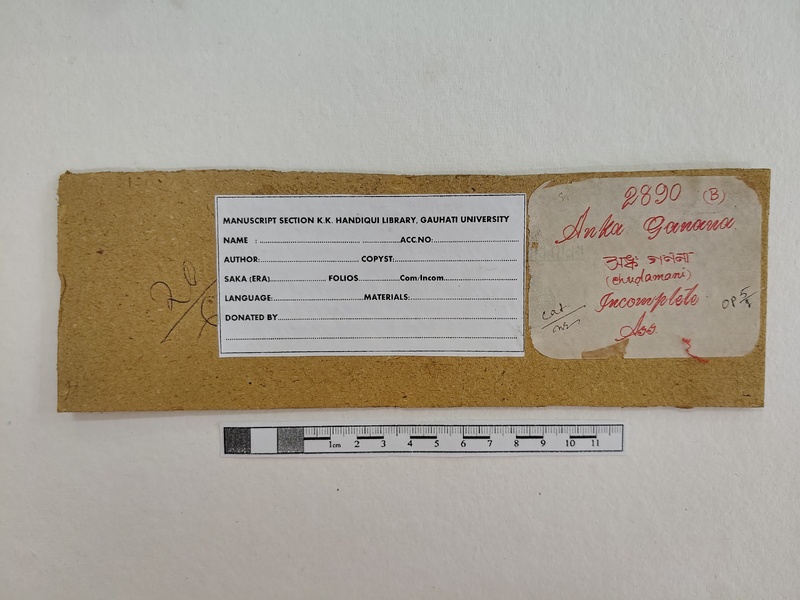 Anka Ganana
 -
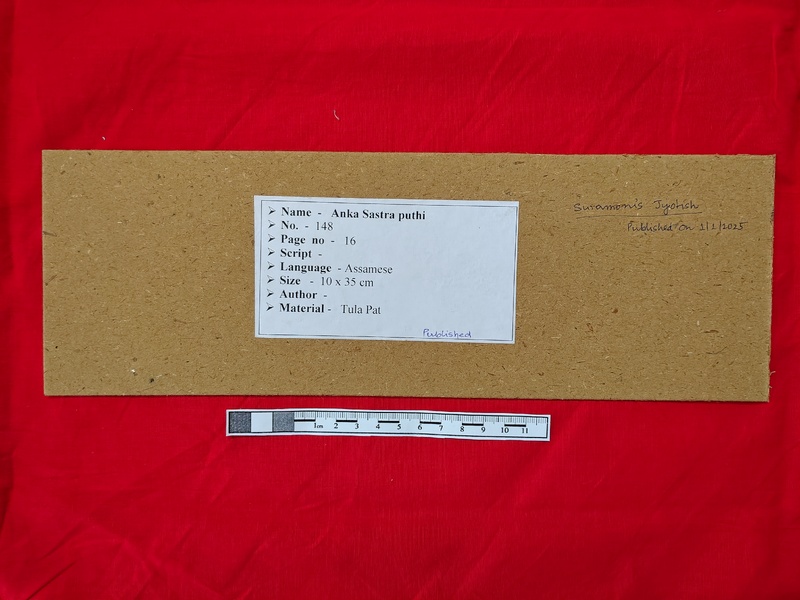 Anka Sastra Puthi (Churamoni's Jyotish)The manuscript contains a wide range of practical mathematical problems, including āṭhkathā, relationships among different units of measurement, pancak, mahinā, the buying and selling of goods, donations, land surveying, and various specialised calculations. During this period, the Kayasthas appear to have exercised considerable influence over the practice of practical mathematics in Assam. However, Curāmani was perhaps not a Kayastha. At the beginning of the manuscript, therefore, he respectfully appeals to the Kayasthas, who had long been practitioners of mathematical knowledge, to pardon him for any shortcomings or errors in his work. This opening appeal reflects both the social authority associated with the Kayastha mathematical tradition and the author’s recognition of their established expertise.
 -
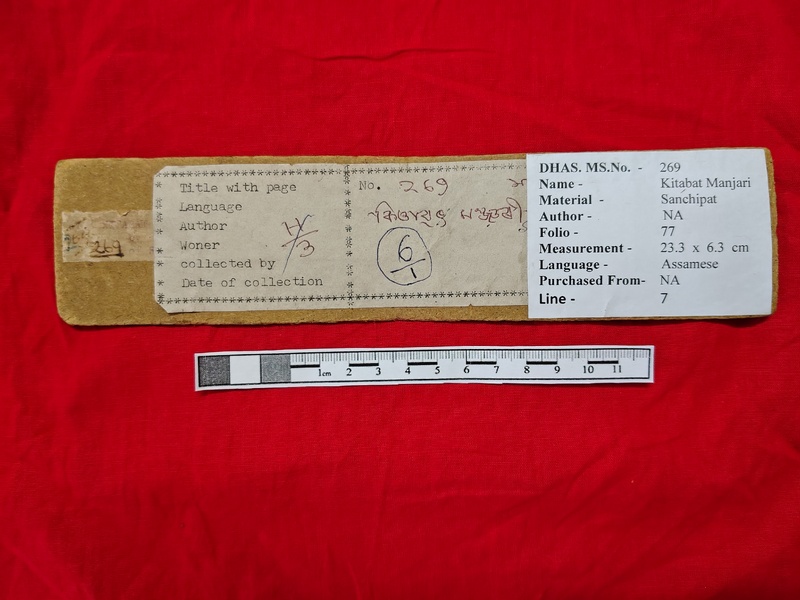 Kitabat ManjariThis is the first mathematical treatise on Kāithelī Mathematics. It covers arithmetic, land measurement and surveying, as well as the management of deposits, income, and expenditure. The manuscript initially provides an account of how to manage income and expenditures under various sections. Arithmetic is subsequently divided into three sections: āṭhkathā, daśāṃśa, and bidyā uṭhi. The āṭhkathā section presents rules for addition, subtraction, multiplication, and division; daśāṃśa deals with fractional numbers; and bidyā uṭhi contains miscellaneous mathematical problems. Interestingly, the text recommends that multiplication should be taught first, with addition introduced subsequently as a corollary. Similarly, subtraction is presented as a corollary of division, suggesting a particular pedagogical sequence for the teaching of arithmetic. Beyond arithmetic, the manuscript provides methods for measuring land and determining the area of different plots. Towards the end, it includes mathematical examples attributed to several mathematicians, including Narayan Das, Umapati Siddha, Hridayananda Kayastha, and Durga Das. These references indicate the circulation and transmission of mathematical knowledge through individual practitioners and teachers within the Kāithelī tradition.
 -
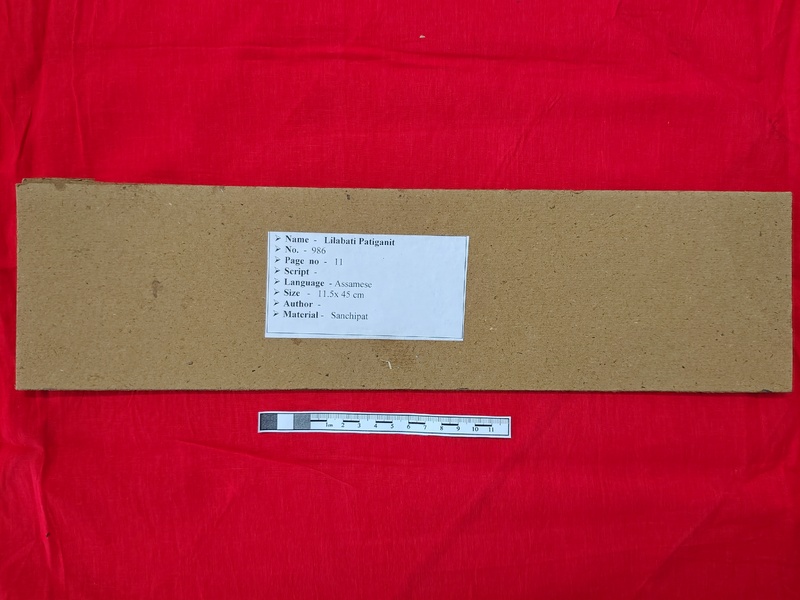 Lilavati PatiganitAlthough the manuscript is titled Līlāvatī Pāṭigaṇit, the mathematical problems contained in the surviving folios do not closely correspond to those found in Bhāskarācārya’s Līlāvatī. Instead, they show greater affinity with the problems found in other Kāithelī mathematical texts. The manuscript deals with a diverse range of practical mathematical problems, including land surveying, donations to priests, pancak, and other specialised calculations. Most of the solutions are presented in verse form. The manuscript begins with problems concerning the calculation of the areas of land plots of different shapes. Particularly noteworthy is the presence of twenty diagrams depicting various forms of land, along with their corresponding measurements—a feature not commonly found in other manuscripts of this tradition. These include Mr̥idangiyār (referring to land shaped like a mridangam), Ḍimaruār (referring to land shaped like a damru), Bicaniyar (referring to land shaped like a hand fan), and Dhenuākār (referring to land shaped like a bow), among others. The inclusion of such diagrams demonstrates the close relationship between mathematical calculation, geometric forms, and the practical measurement and classification of land.