
Kaitheli Anka
CollectionAbout this Collection
During medieval period in Assam, the Kayasthas (the highest class of Shudras whose occupation is penmanship) were engaged in the census works and clerical jobs and thus, a kind of mathematics was developed by them. In the regional language of Kamrupa, the Kayasthas are known as ‘Kaith’ and hence, this type of mathematics took the name as ‘Kaitheli Anka’.
-
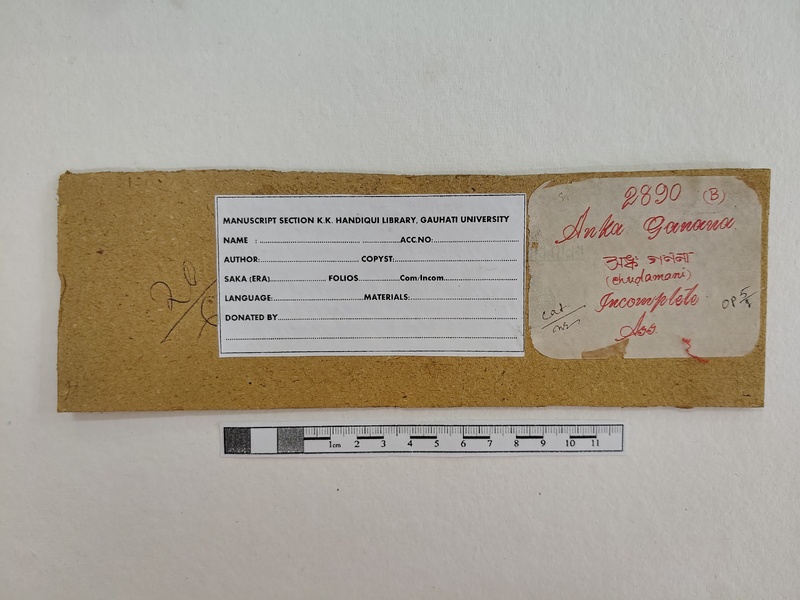
Anka Ganana
ManuscriptAug 21, 2026 -
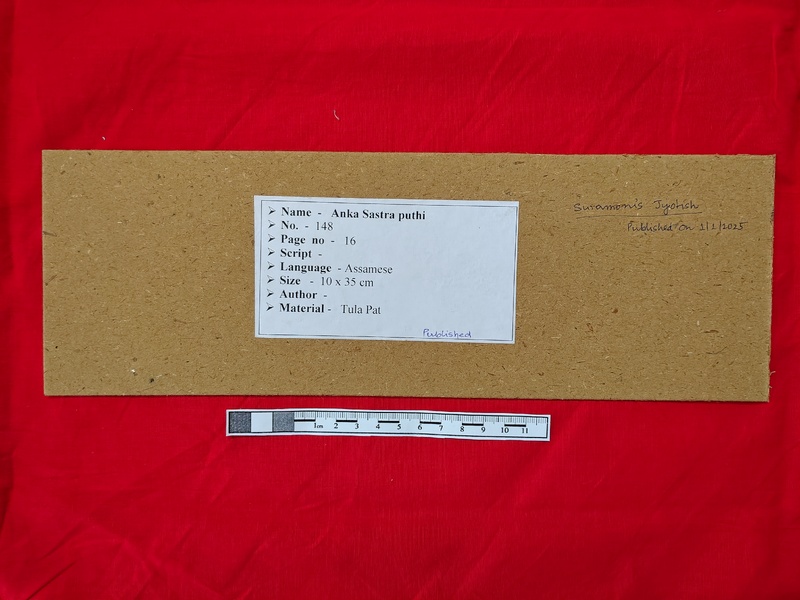
Anka Sastra Puthi (Churamoni's Jyotish)
ManuscriptThe manuscript contains a wide range of practical mathematical problems, including āṭhkathā, relationships among different units of measurement, pancak, mahinā, the buying and selling of goods, donations, land surveying, and various specialised calculations. During this period, the Kayasthas appear to have exercised considerable influence over the practice of practical mathematics in Assam. However, Curāmani was perhaps not a Kayastha. At the beginning of the manuscript, therefore, he respectfully appeals to the Kayasthas, who had long been practitioners of mathematical knowledge, to pardon him for any shortcomings or errors in his work. This opening appeal reflects both the social authority associated with the Kayastha mathematical tradition and the author’s recognition of their established expertise.Aug 21, 2026 -
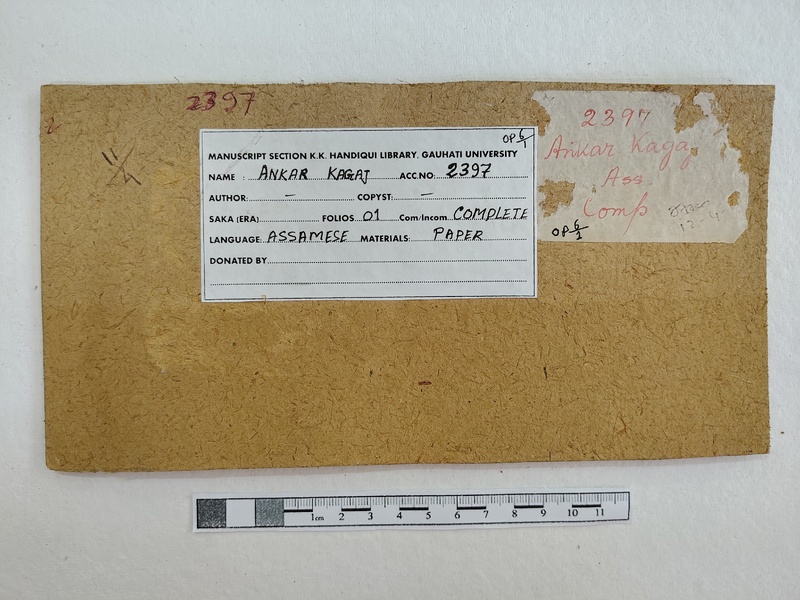
Ankar Kagaj
ManuscriptBeginning with a discussion of land surveying, the manuscript proceeds to address the measurement of various solid objects.Aug 21, 2026 -
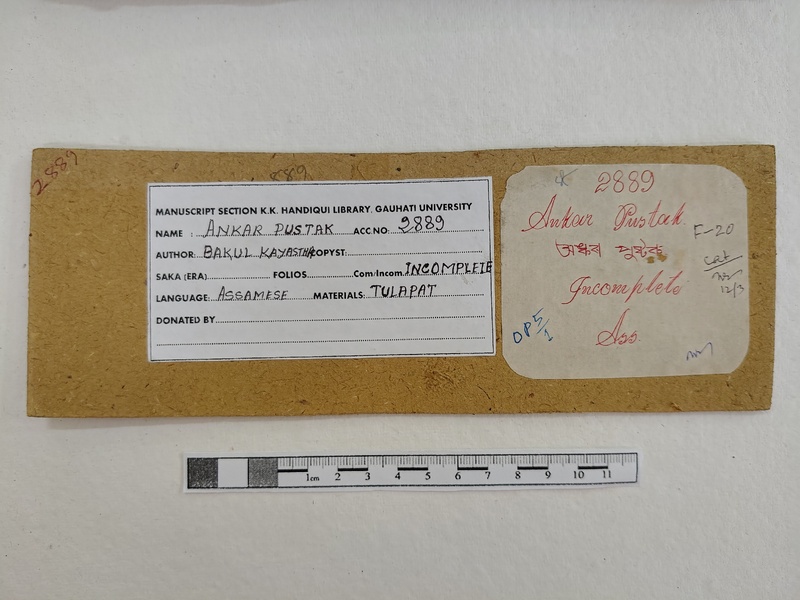
Ankar Pustak
ManuscriptAug 24, 2026 -
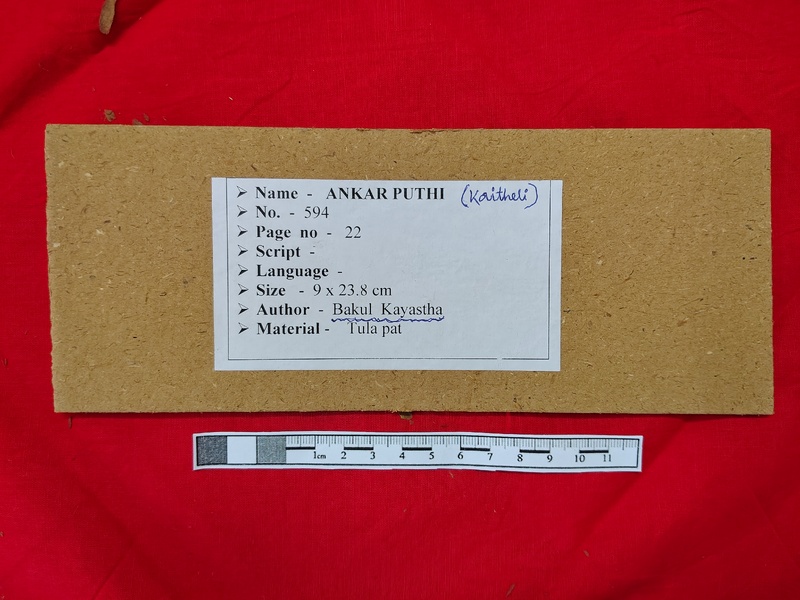
Ankar Puthi
ManuscriptThe manuscript provides valuable insights into the social conditions of medieval Assam. It discusses the house or premises rent during the Koch period. It includes sums associated with a particular type of non-taxable land known as Nānkār Jami. Also, the manuscript sheds light on the participation of women in trade and provides information about their social status. Notably, the manuscript suggests a gendered distinction in the social significance of bodily and calendrical markers: for women, menstrual dates were considered important, whereas for men, greater importance was attached to the date of birth, as it was used to prepare a horoscope and determine an individual’s fortune.Aug 19, 2026 -
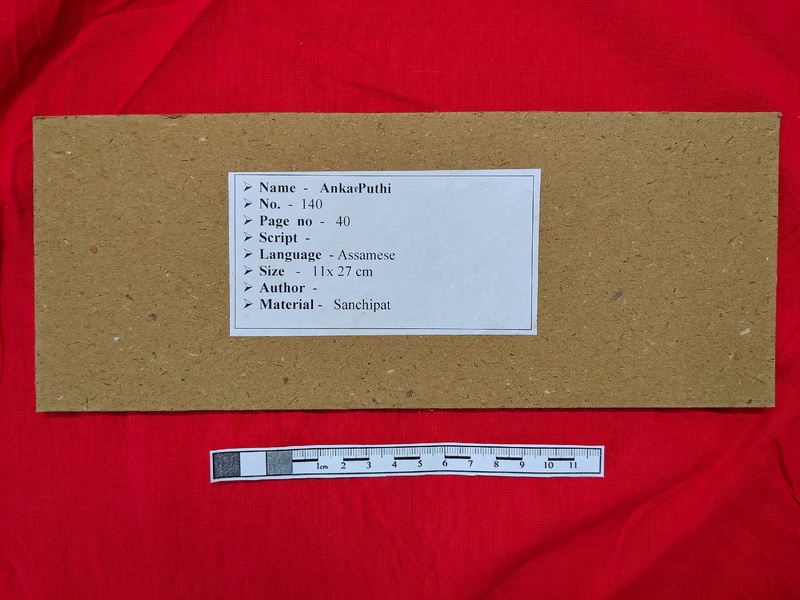
Ankar Puthi
ManuscriptThe manuscript contains calculations concerning āṭhkathā, relationships among different units of measurement, pancak, mahinā, land surveying, donations, and other specialised subjects. It also illustrates how mathematical calculations were employed not merely for practical purposes but also for interpreting and forecasting events, particularly in determining whether an occurrence was favourable and in assessing the auspiciousness of particular events.Aug 19, 2026 -
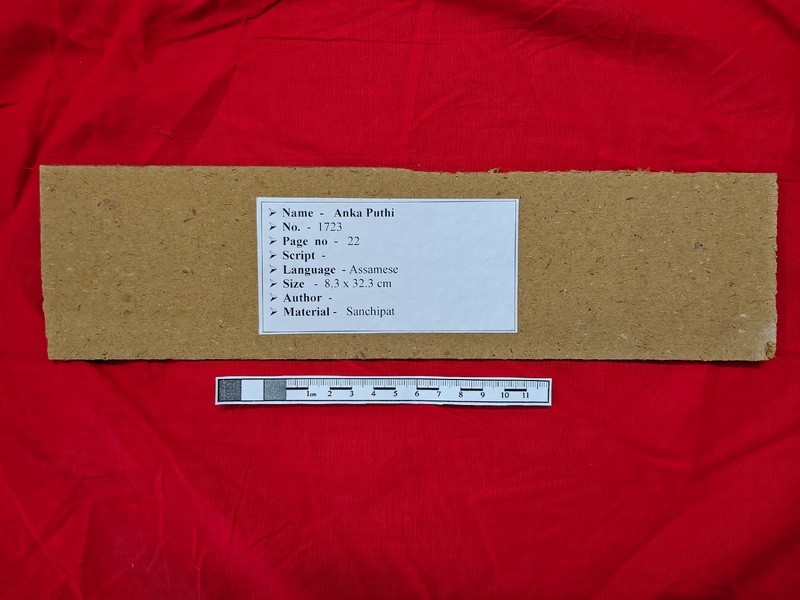
Ankar Puthi
ManuscriptThe manuscript starts with a table of ten's power. It provides some other tables including measurement with the parts of hand and these tables are written in Sanskrit language. The language used for sums is medieval Assamese. The manuscript, notably, includes sums on measuring land and selling solid items. Units of hand measurements for measuring land used are: āngul, beget, hāt, etc. Units of solid items used are: karā, kāun poṇ, etc.Aug 20, 2026 -
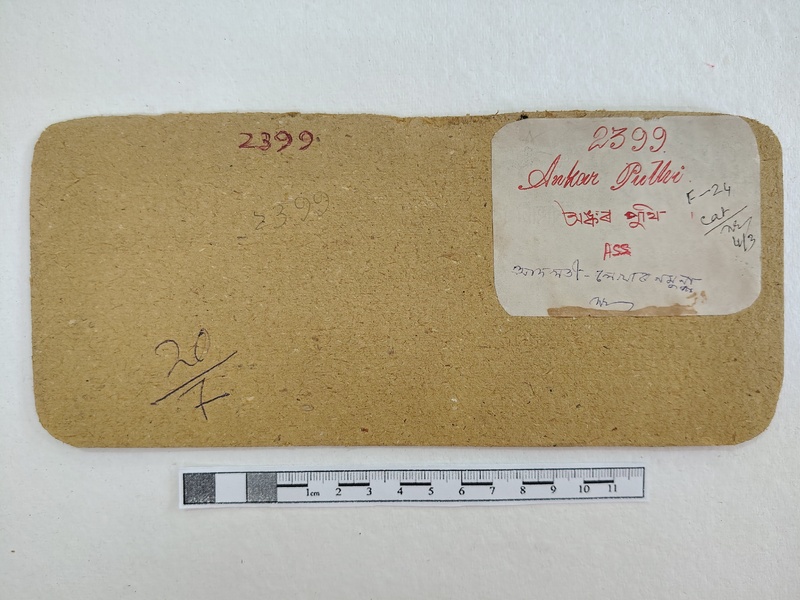
Ankar Puthi
ManuscriptAug 24, 2026 -
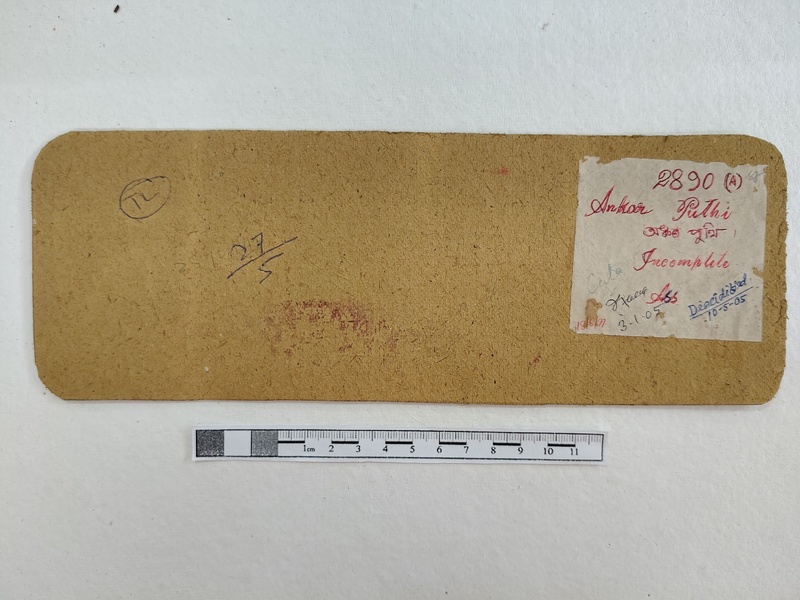
Ankar Puthi
ManuscriptAug 24, 2026 -
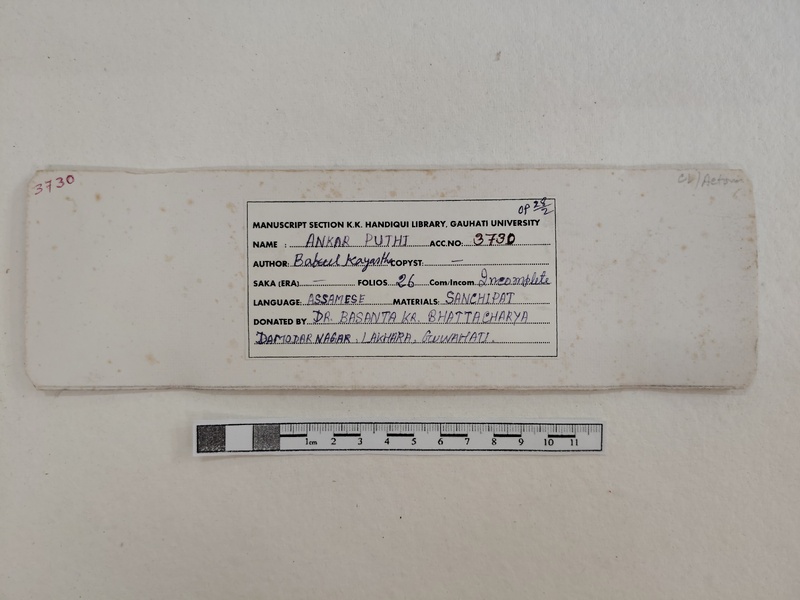
Ankar Puthi
ManuscriptAug 24, 2026 -
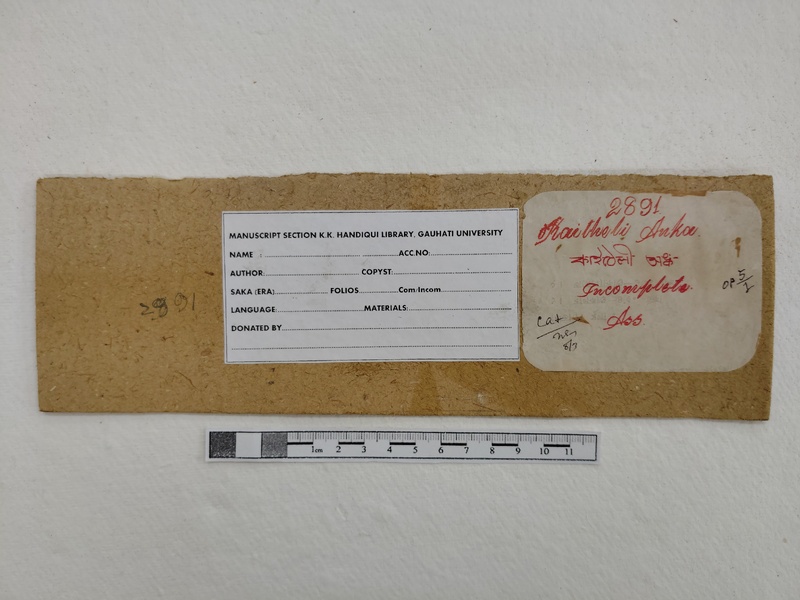
Kaitheli Anka
ManuscriptThe manuscript discusses land surveying, measurement of solid items using measuring units kāun, gaṇḍā, etc.Aug 27, 2026 -
Kaitheli Anka
ManuscriptThe manuscript includes mixed problems of Kaitheli MathematicsAug 27, 2026 -
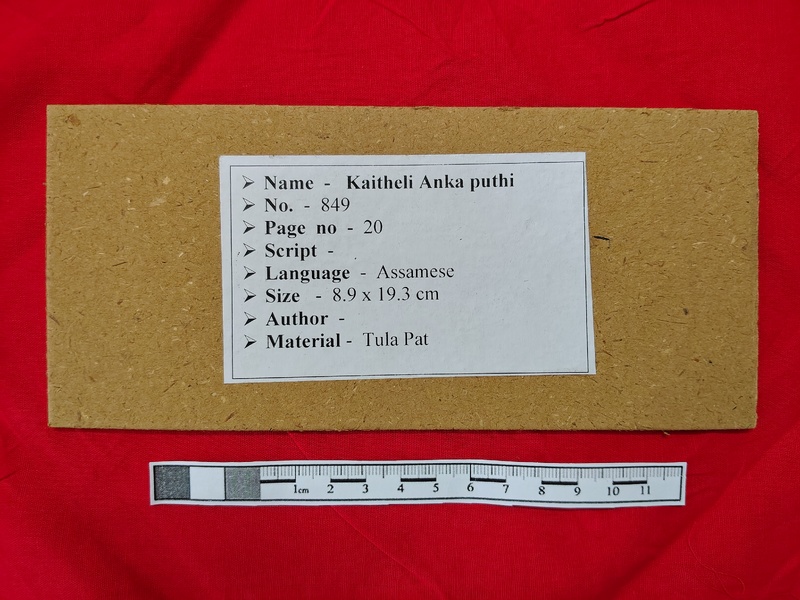
Kaitheli Anka Puthi
ManuscriptThe manuscript contains sums of panchak, land survey, donation, special types, etc. Units of measurement such as kāun, sok, pon, gandā, bat etc. are used in the manuscript.Aug 19, 2026 -
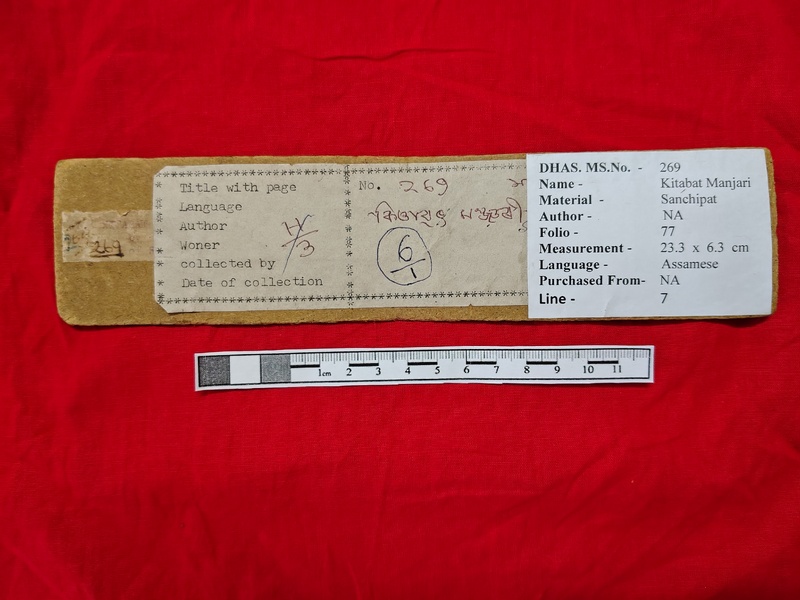
Kitabat Manjari
ManuscriptThis is the first mathematical treatise on Kāithelī Mathematics. It covers arithmetic, land measurement and surveying, as well as the management of deposits, income, and expenditure. The manuscript initially provides an account of how to manage income and expenditures under various sections. Arithmetic is subsequently divided into three sections: āṭhkathā, daśāṃśa, and bidyā uṭhi. The āṭhkathā section presents rules for addition, subtraction, multiplication, and division; daśāṃśa deals with fractional numbers; and bidyā uṭhi contains miscellaneous mathematical problems. Interestingly, the text recommends that multiplication should be taught first, with addition introduced subsequently as a corollary. Similarly, subtraction is presented as a corollary of division, suggesting a particular pedagogical sequence for the teaching of arithmetic. Beyond arithmetic, the manuscript provides methods for measuring land and determining the area of different plots. Towards the end, it includes mathematical examples attributed to several mathematicians, including Narayan Das, Umapati Siddha, Hridayananda Kayastha, and Durga Das. These references indicate the circulation and transmission of mathematical knowledge through individual practitioners and teachers within the Kāithelī tradition.Aug 20, 2026 -
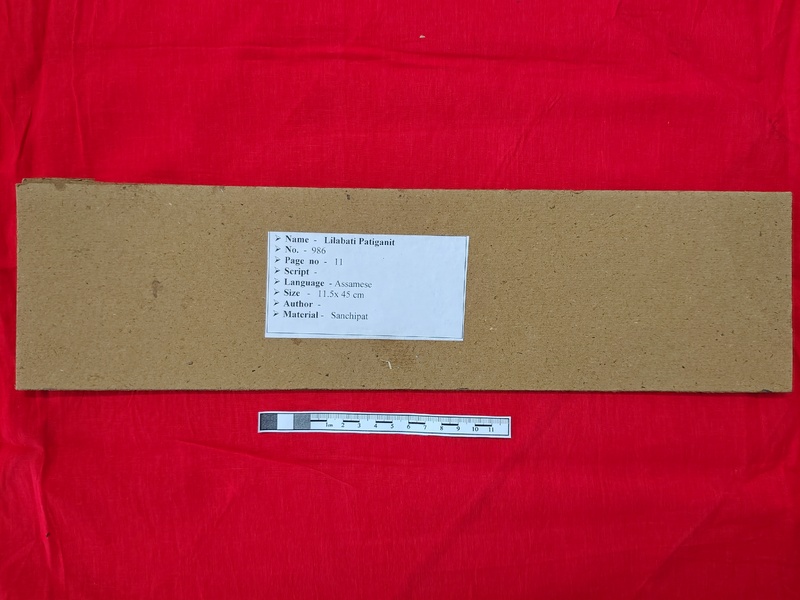
Lilavati Patiganit
ManuscriptAlthough the manuscript is titled Līlāvatī Pāṭigaṇit, the mathematical problems contained in the surviving folios do not closely correspond to those found in Bhāskarācārya’s Līlāvatī. Instead, they show greater affinity with the problems found in other Kāithelī mathematical texts. The manuscript deals with a diverse range of practical mathematical problems, including land surveying, donations to priests, pancak, and other specialised calculations. Most of the solutions are presented in verse form. The manuscript begins with problems concerning the calculation of the areas of land plots of different shapes. Particularly noteworthy is the presence of twenty diagrams depicting various forms of land, along with their corresponding measurements—a feature not commonly found in other manuscripts of this tradition. These include Mr̥idangiyār (referring to land shaped like a mridangam), Ḍimaruār (referring to land shaped like a damru), Bicaniyar (referring to land shaped like a hand fan), and Dhenuākār (referring to land shaped like a bow), among others. The inclusion of such diagrams demonstrates the close relationship between mathematical calculation, geometric forms, and the practical measurement and classification of land.Aug 20, 2026 -
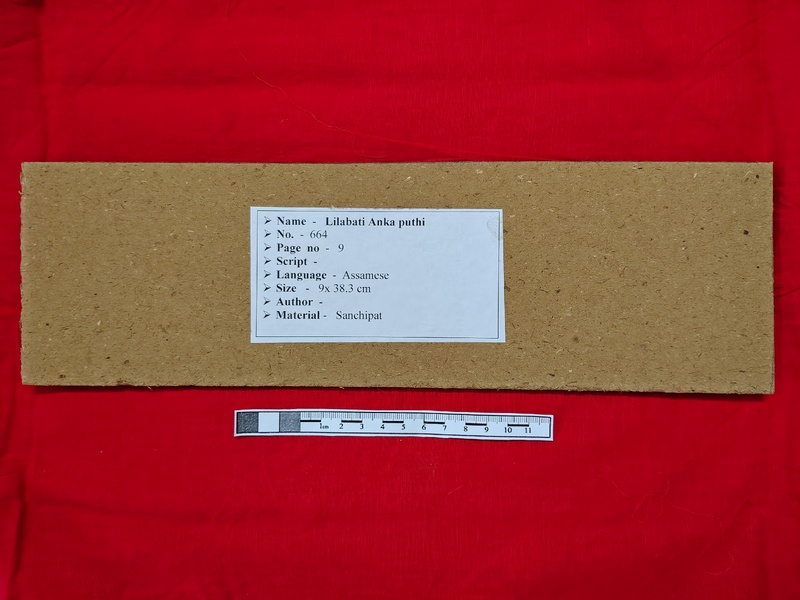
Lilavatir Anka Puthi
ManuscriptAlthough the manuscript is titled Līlāvatīr Anka Puthi, the mathematical problems found in the currently available folios do not correspond closely to those in Bhāskarācārya’s Līlāvatī. Rather, they bear greater resemblance to the problems found in other texts of Kāithelī mathematics. The manuscript includes problems related to the laying of house foundations, donations to priests, ratios involving compound numbers, pancak, the buying and selling of goods, land surveying, and various specialised mathematical calculations.Aug 20, 2026