
Accounting 🧾
About the Collection
Accounting, as a way of systematically recording events, is very common and is often essential for activities that involve many people. Accounts encode trust, obligation, dues, credibility, accountability, and evidence, thereby structuring future planning and resource allocation. They support transparency, verification, and the governance of economic and social relations by making transactions explicit, comparable, and defensible. The effects of these records on the public depend on the social roles of the institutions that produce them. For example, the accounts of fishing auctions in a small village like Mudaliarkuppam near Puducherry may not affect people outside the village very much. In contrast, the financial statements of nation-states and multinational companies can affect people across the world, as they influence policies, rights, and the sharing of natural resources.
Accounting is therefore an important place to study mathematical practices in relation to society. To support such study, we are bringing together different kinds of materials such as teaching resources, accounts, reports, and letters written by accountants. We also look at other sources that talk about accounting and accountants, such as folk stories, songs, short stories, riddles, and idioms.
Overview of the Accounting Collection
We focus on two kinds of accounts, revenue accounts and the mercantile accounts, primarily from pre-colonial and colonial periods. Revenue records, such as Chengalpattu Avanangal and Matilakom records serve as the records of practice of the village and revenue accountants, while the accounts of mercantile households such as the K.V. AL. RM. RM. Valli Muthiah family accounts speak for the practice and context of the mercantile accountant.
We invite researchers, descendants of accounting families, archivists, and community members to contribute. If you have access to account books, revenue records, correspondence, receipts, pedagogical materials, or any documents related to accounting practices, we would be grateful to hear from you. Your contributions will help us build a richer, more representative archive that captures the diverse histories of accounting across the Indian subcontinent. Please get in touch if you would like to share materials or collaborate.
Accounting as a means to facilitate the control and management of resources and people, as well as to ascribe value and structure exchange relations, has a long history. Both the history and epistemology of accounting practices is also closely tied to that of computational practices. Scholars have noted, for instance, that the development and use of the sexagesimal place‑value system in Mesopotamia, from the late fourth to the third millennium BCE, was in the context of recording trade, rations, and goods on clay tablets. Luca Pacioli’s Summa de arithmetica, geometria, proportioni et proportionalità (1494), one of the earliest printed works on algebra, is also among the earliest printed texts to discuss double‑entry bookkeeping. This text presented bookkeeping methods, alongside a broad overview of contemporary mathematical principles. The text, whose material came from vernacular traditions and vernacular sources, was written in vernacular Italian as a practical manual for merchants and professionals in Italy, particularly Venice.
In this sense, accounting becomes a crucial site to learn about mathematical practices in relation to the social. The relation between accounting manuals, the practice of the accountant and the consequence of accounts thus produced can potentially be investigated through contextualising the surviving records of (about) accountants and accounting. These may include pedagogic materials, accounts, reports, letters, secondary sources which talk about accountants and accounting such as folk stories, songs, short stories, riddles, idioms and so on. The relationship between accountants’ schooling and their practice may also be examined in the same way.
“It is very common among the Tamil speaking public to identify the computational act, or the mathematical mind, as a manipulative one: a cunning mind that constantly schemes, plots and destroys. Central to this perception is also the dislike the Kaṇakkaṉ incited by his role in the aid of his master, the administration or the rich landlord, the Zamindar, a common theme carried in popular culture. Consider the rather harsh usage that Sivasubramanian records from the people: ‘Kaṇakkaṉ cettāl piṇam, Kaṇakkaṉ āttāl cettāl maṇam’ which means that if the Kaṇakkaṉ dies, it is just a matter of a corpse, but if his mother dies, then it is an occasion. If the Kaṇakkaṉ dies, people are relieved that it is just a matter of burial and get done with it, but if his mother dies then everyone has to be present so that they do not upset the Kaṇakkaṉ, making it a compulsory occasion.” (Page 90, Babu, 2022)
The revenue accountant and mercantile accountant in the Indian subcontinent has historically been caste occupations, with there being jatis (caste groups) whose occupations centre on bookkeeping and financial intermediation. As mentioned earlier, in this archive we bring together various account books, revenue records, pedagogical materials addressed to accountants and other records of their practice (correspondences, receipts, reports) as a context to inquire about the relations between practices like valuation, measuring, computations, proportional reasoning and so on and the public in a graded hierarchical society. Concurrently we hope this collection will also encourage inquiries along the lines of
1) what the terms, numbers and operations in the accounts, accounting and that of the accountant, meant for the public,
2) what accounting meant for the accountants and the ones who appoint the accountant and
3) the kinds of relationships they made possible or restricted, in a caste society.
Below we list some of possible lines of inquiries and questions which resonate with us, particularly in the context of mercantile accounting. Kindly write to us if you would like to pursue any of these questions or any question of your choices based on our collections.
-
The accountant assigns or records values to people, their labour, and their produce without directly participating in production. They facilitate exchange and thereby help create and mediate value. How do others, particularly the labourer, come to trust, or distrust them?
- What is the role of rhetorical power of the accounts and the perceived objectivity of numbers in meditating trust in accounts? Accounting can function as a persuasive language as much as a descriptive one. In what ways do formats, categories, and summaries in accounts work rhetorically to persuade readers, investors, creditors, officials, or community members, of the credibility, morality, or success of an enterprise? What are the other possible factors involved?
- What does this tell us about the accountability of the accountant? Who are they accountable to? The world of numbers and computations? People? The merchant? The state? The logic of exchange relations?
- The audience for accounting has changed over time, from a small circle of partners or rulers to shareholders, regulators, and the wider public. How do these shifting audiences reshape what is recorded, how it is presented, and which aspects of economic life are made visible or remain invisible in the accounts?
-
Histories of economic thought are often written separately from histories of mathematical practice. What kind of questions can we ask if we bring them together? For instance, how can an archive of accounting ledgers and other products of everyday accounting work help us understand the relationship between economic ideas and mathematical techniques and consequently their meaning for the social, especially if we look at them through the lens of practice?
- A ledger page may look like nothing more than rows and columns of numbers and prices. What does such a page signify to different participants, the trader, the producer, the labourer, other parties to an exchange, and the state? Do they hold the same meaning to everyone? Do they treat each party the same? Do they serve different functions viz a viz who they are addressing to and who is looking at it? What does this tell us about the nature of numbers and objectivity of mathematical computations?
- Following up from above. How do we look at the numbers in accounting ledgers? Do they represent mere quantities of money and goods, or do they represent social relations or various kinds? In other words, do they stand alone as abstract symbols and hence, neutral values which are beyond manipulation? Or do they embody aspects of the underlying social relations as well?
- What does computations mean for these social relations? Are these relations ossified the moment they enter ledgers as numbers or do numbers and subsequent computations shape, reshape, interpret and also erase/visibilise and create relationalities?
- How may we investigate this? By contrasting accounts against financial reports, correspondences? Oral histories from those who were subjected to it?
- What does computations mean for these social relations? Are these relations ossified the moment they enter ledgers as numbers or do numbers and subsequent computations shape, reshape, interpret and also erase/visibilise and create relationalities?
- What is the role of exactness/correctness of computations in establishing the legitimacy of the accountant and account? Is this correctness only limited to the realm of numbers and computations? How does it relate to exactness in the record of events? What is invisibilised in the process? That is, what are the essentials and non essentials to claims of correctness and exactness?
- Given this, What does errors in numbers and calculations mean for the underlying social relations? Also what distinguishes errors from manipulations? Are the consequences of errors and manipulations similar or different?
-
When accounting is tied to caste, is the perceived virtuosity and authority of accounting practice a function of the practice of accounting or is it a function of the caste location of the accountant? How do the accounting caste groups and values embedded in/ascribed to accounting as a practice produce each other? Also, how does accounting in this case relate to intercaste relations? How does the proficiency of an accountant in mathematical practices relate to this? Are proficiency, virtuosity, authority and caste positions related?
-
A key objective of accounting is to establish equivalence between various exchange relations through ascription of monetary value. How does this function in a graded hierarchy like caste society? Does account and accountant flatten hierarchies or reproduce them nevertheless? How do they achieve either?
- One promise of accounting is that it helps avoid suspicion and ignorance by making transactions explicit and verifiable. How does this promise work in stratified societies, including caste societies, where not everyone has equal access to learning, interpreting, or challenging the accounts? What forms of opacity or exclusion persist even when records exist? Or in other words are the notions of exactness, equivalence and the likes remain the same for everyone? What can we infer from reports and correspondences and the likes?
-
How do we understand the accountant? While they may appear to hold the power to dictate terms and influence lives, their authority is, in a sense, borrowed from the institutions they represent, whether the zamindars and merchants of the past or modern MNCs. As representatives of these institutions, accountants also face public resentment, as seen in the excerpt we discussed earlier. What was the relationship between people and accountants? How has it evolved over time? What role did the perceived mathematical proficiency of accountants and specific caste groups play in shaping this relationship?
-
When trading in money (loans) itself becomes a primary field of exchange, accounting acquires a central role in setting interests, instalments, and schedules of repayment. How do accounting systems and practices articulate ideas of fairness and the promise to reduce arbitrariness in these monetary decisions? Where do we see tensions between formal fairness in the numbers and lived experiences of debt and obligation?
-
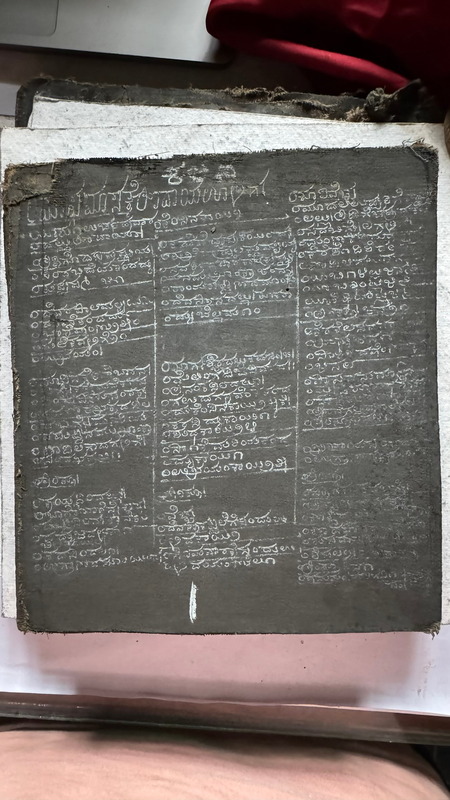 KadataKadata records are an accountant documents written by scribes employed by Mutt administration. This kadata is written by Venkatakrishniah Bhatta for Kalasa property administration dated mid-eighteenth century.Nov 07, 2025
 -
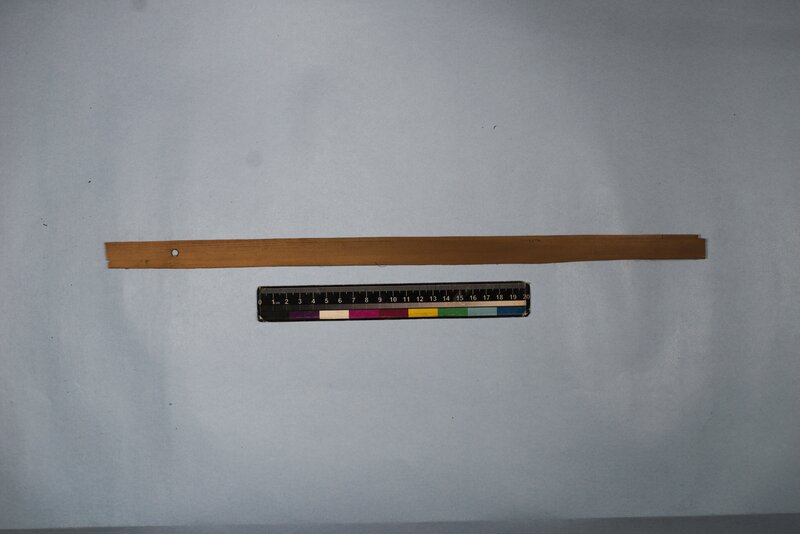 Kovil KanakkuAs the name suggests, this is possibly an account (book) related to a temple. The text requires careful study to understand its context and the mathematical practices it reflects.Jul 09, 2024
 -
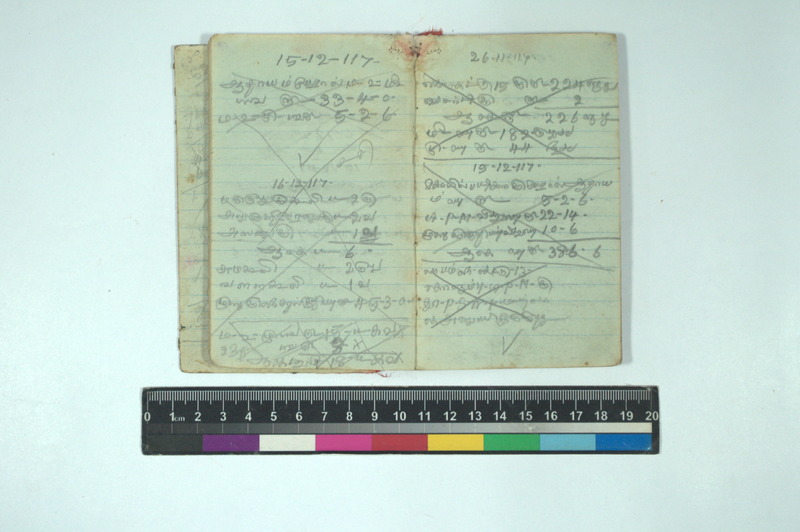 Meenpidi KanakkuContains 198 pages. Readable. Complete. Preserved in good condition. The manuscript deals with day-to-day fishery accounts in the 1940s. It is sourced from a Muslim household in the Coromandel coast.CE